Due to the high volume of orders, orders may be processed with a slight delay

Search

In Stock

Humby – Braithwaite Dermatome (Skin Graft Knive)

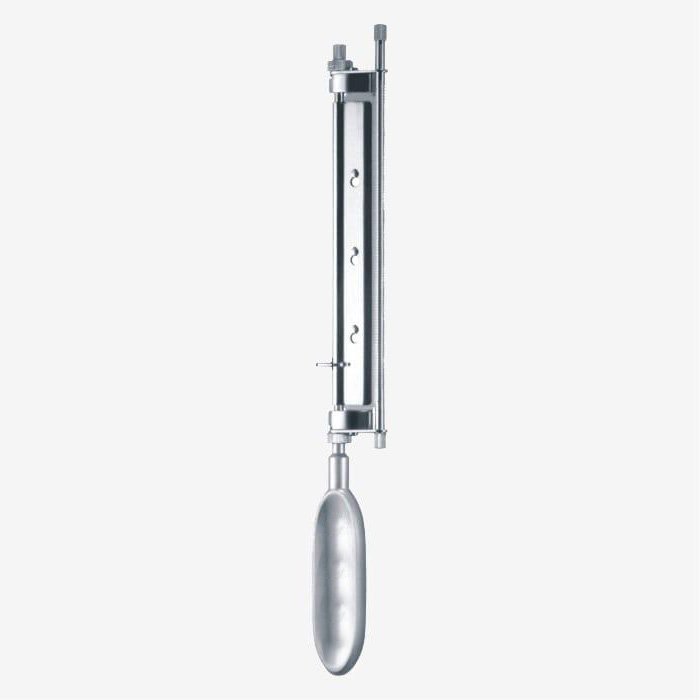
Humby – Braithwaite Dermatome (Skin Graft Knife) was developed by Graham Humby in England who was working at the Great Ormonde Street, London. Braithwaite Fenton introduced a new model combining modifications so that the instrument need not be dismantled to replace the blade.

  • Adjustable Settings Enabling A Variation In Thickness Of Skin Graft
  • Adjustable Cut Thickness From 0.1mm To 1.2mm
  • Max Cut Width 155mm, 32 cm (13″) Inches
  • Interchangeable Blades Available


SKU:701fc495337d

The Humby – Braithwaite Dermatome (Skin Graft Knife) is used to collect a slice of healthy skin from donor site to perform a skin graft on a site with tissue loss. Donor sites for the harvest of skin graft include the lumbar and gluteal regions (thick skin), the thighs, and the arms (thin skin). The thigh is generally the usual donor site for smaller quantities of graft.

HISTORICAL INSIGHT

The first widely used instrument permitting depth control was that developed by Graham Humby in England who was working at the Hospital for Sick Children, Great Ormonde Street, London, prior to World War II when he was a junior dresser to Sir Heneage Ogilvie. Humby added a roller to the Blair knife. The distance between the roller and the blade of the knife could be varied by means of a calibration device.

A replaceable blade was reintroduced by Denis Charles Bodenham for use in carriers equivalent to the standard Blair and Humby knives. The new blades could be easily changed, obviating the need for tedious sharpening that was previously necessary. The advantage of the interchangeable blade, which is now almost universal, is that it gives a much cleaner cut with minimal drag from bluntness, but this is, to some extent, offset by the slight lack of rigidity of the blade that is thin and only partly supported. As a result, the adjustment markings present on the knife give a setting that tends to vary with different blades, and reliance on the markings alone in setting the roller will give inconsistence of graft thickness

Braithwaite Fenton in 1955 introduced a new model combining modifications so that the instrument need not be dismantled to replace the blade. Adjustment between the roller and the blade was achieved by two knurled collars mounted on the back of the knife. The blade was of the wafer razor type and was locked securely in the leaf spring holder. To fit a new blade, it was necessary to move a safety catch, open the leaf and insert the blade under the roller, and replace the safety catch. The knife without the blade could be sterilised by boiling without the risk for damage, and no protective cover was necessary for sterilisation or storage.

When cutting thin split skin grafts, however, with the Braithwaite knife there is a tendency for the skin to roll up round the guard, and although this can be corrected by an assistant’s traction on the cut skin, this manoeuvre is liable to tear the sheet of skin or cause the knife to cut out. Moreover, the roller must slide to and fro along its long axis, necessitating slack end-bearings that reduce precision in the setting; hence, the graft sometimes becomes gradually thicker as the knife progresses. Usually, two adjustments are necessary at either end of the knife to set the depths of cut; if these are set unequally, the graft will be thicker at one side than the other.

To remedy these disadvantages, Watson John in 1960 produced a knife with a fixed, polished, stainless-steel guard and a simpler, more rigid thickness adjustment.

REFERENCES: Ameer F, Singh AK, Kumar S. Evolution of instruments for harvest of the skin grafts. Indian J Plast Surg 2013;46:28-35.

Author Name

Humby

Specialty

Orthopedic, Plastic Surgery, Skin Grafting

Sub-Category

Skin Graft Knives

Category

Knives, Needles & Picks

Handle Type

Hollow Handle

Overall Length

32 cm – 13″

Finish

Satin

Material

Stainless Steel

CE Marking

Yes

Reusable

Yes

Used in Specialties: Orthopedic
Plastic Surgery
Skin Grafting
Product Category: Knives, Needles & Picks
Product Type: Skin Graft Knives

Bestsellers

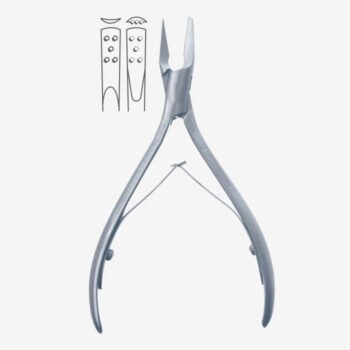
Anvil Nail Extracting Forceps
This product is already in quote request list.

Anvil Nail Extracting Forceps

(0 Reviews)
Anvil Nail Extracting Forceps is a specialized orthopedic and podiatry device that surgeons can use to cut, divide and extract complete nails or ingrowth nail pieces, in order to prevent further complications.
  • Blunt and Sharp Edges for Cutting Nails with Ease.
  • Double Spring Mechanism for Smooth
  • Plier Style Grip Handle Ensuring Superior Control.
This product is already in quote request list.
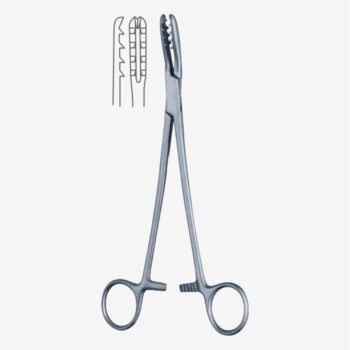
Bircher-Ganske Cartilage Seizing Forcep
This product is already in quote request list.

Bircher-Ganske Cartilage Seizing Forcep

(0 Reviews)
Bircher-Ganske Cartilage Seizing Forcep is a specialized surgical tool that orthopedic surgeons commonly use to manipulate cartilages from articular surfaces and certain bone structures, in order to perform joint repairing procedures.
  • Deep Teeth Granting Strong Grasping.
  • Ratchet Mechanism for Static Action.
  • Ergonomic Finger Rings Ensuring Enhanced Handling.
This product is already in quote request list.
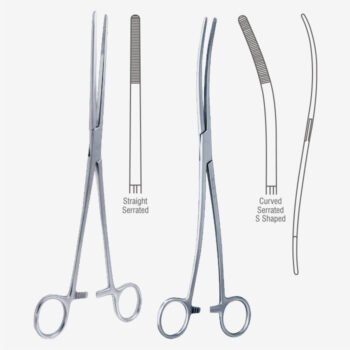
Bozeman Sponge Holding Forcep
This product is already in quote request list.

Bozeman Sponge Holding Forcep

(0 Reviews)
Bozeman Sponge Holding Forcep is a specialized surgical tool that surgeons in multiple areas, especially in GYN/OB, can use to absorb blood and other fluids from the surgical field.
  • Long Serrated Jaws for Carrying Large Dressings.
  • Straight & S-Shaped Designs for Suiting Different Applications.
  • Ergonomic Finger Rings Ensuring Maximum Control.
This product is already in quote request list.
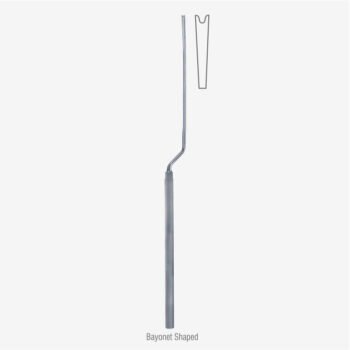
Caspar Ligature Adjuster
This product is already in quote request list.

Caspar Ligature Adjuster

(0 Reviews)
Caspar Ligature Adjusters are specialist surgical instruments with bayonet shafts that assist in making ligatures during suturing manipulations.
  • Long Handle With External Serrations For Confident Control.
  • Bicornuate Tip With Long Neck For Ideal Control Of Sutures.
  • Bayonet Shaft To Enhance Operator's Visualization Of The Jaws.
This product is already in quote request list.
Cobb Periosteal Elevator
This product is already in quote request list.

Cobb Periosteal Elevator

(0 Reviews)
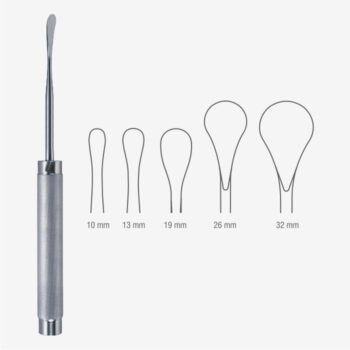
Cobb Periosteal Elevator is a specialized orthopedic instrument that surgeons commonly use for lifting and dissecting periosteum and other bone adnexa, in order to expose their underlying bone structures.
  • Round Cutting Edge for Opening Incisions.
  • 10.0 to 32.0mm Blade Size for Treating Children & Adults.
  • Diamond Knurling Grip for Maximum Control.
This product is already in quote request list.
Crile Retractor
This product is already in quote request list.

Crile Retractor

(0 Reviews)
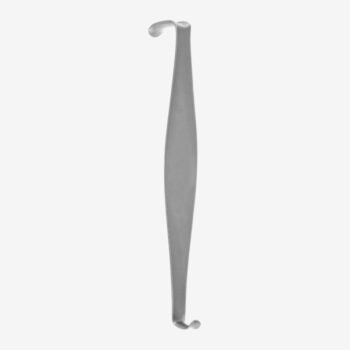
Crile Retractor is a hand-held surgical tool that assists surgeons in the retraction of soft tissues and incision edges for revealing their underlying contents, such as organs, cavities and other anatomical structures.
  • L-Shaped Blades With Descending Terminal Lips For Avoiding Injury.
  • Versatile 11.5cm Overall Size For Broadening Small Wounds.
  • Ergonomic Central Handle For Superior Control.
This product is already in quote request list.
Desmarres Lid Retractor
This product is already in quote request list.

Desmarres Lid Retractor

(0 Reviews)
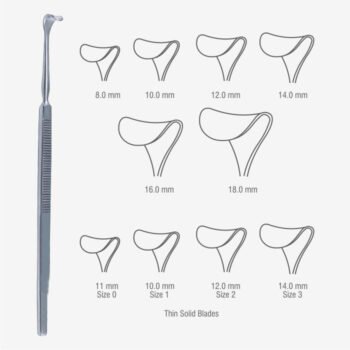
Desmarres Lid Retractor is a hand-held instrument that allows surgeons to retract the desired eyelid from an individual approach during a broad range of ophthalmologic surgeries.
  • Different Blade Sizes For Approaching Multiple Retraction Angles
  • Concave Blade To Follow Up The Anatomy Of The Eye And Avoid Injury
  • Ergonomic Long Handle For Ensuring Superior Surgical Control
This product is already in quote request list.
Back to Top
Product has been added to your cart